

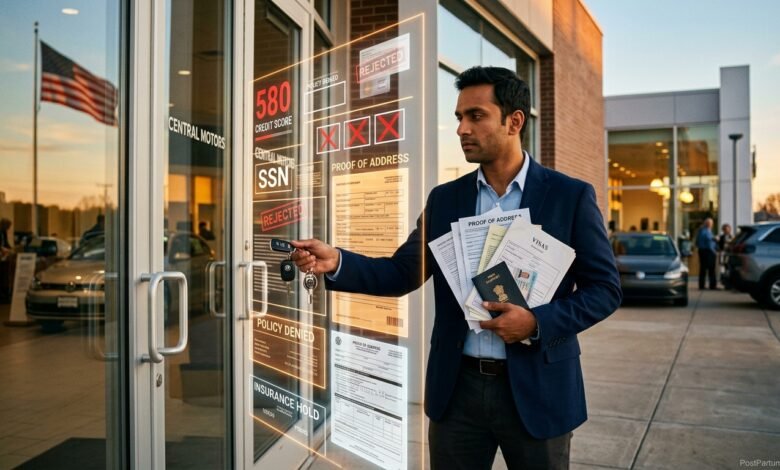
You finally have your driver’s license. You found a car you can afford. The dealership is ready to hand over the keys. Then someone asks for your proof of insurance and the whole process stops cold.
This happens to new immigrants every single day across the United States. Getting proof of insurance as a new arrival is not as simple as walking into a dealership and checking a box. There are real barriers. There are workarounds. And knowing what to expect ahead of time makes the entire process go much smoother.
This article breaks down exactly what documents you need, what insurers look for, and what to do when the usual path does not work for you.
Car insurance in the US is not optional. Every state except New Hampshire requires some level of liability coverage before you can legally register or drive a vehicle. If you are buying a car, proof of that coverage is non-negotiable.
For a complete guide on actually getting car insurance as a new immigrant — including what to do without a US credit score — see our dedicated article on car insurance for new immigrants in the US.
Why Proof of Insurance Matters at the Point of Sale
When you buy a car from a dealership or even a private seller, you typically need to show proof of insurance before you drive off the lot. Dealerships will not let you take a financed vehicle without it. The DMV in most states will not process your registration without it. And if you are financing through a lender, that lender will almost always require full coverage.
Proof of insurance is usually a physical card or a digital document showing your name, policy number, the insured vehicle, coverage dates, and the name of your insurer. Most insurers issue this automatically when you buy a policy. The document is straightforward in theory. Getting the policy behind it is where things get complicated for new arrivals.
Understanding what documents you need before visiting a dealership can save you hours of frustration on the day of purchase.
What Documents Count as Valid Proof of Insurance
Most states accept the following as valid proof of auto insurance:
- A physical insurance ID card issued by your insurer with your name and policy number
- A digital insurance card shown on your smartphone — accepted in most states as of 2025
- A declarations page from your policy if the ID card has not arrived yet
- A binder letter from your insurer confirming temporary coverage while your policy is being processed
The declarations page is especially useful for new immigrants who buy a policy and need same-day proof. Most insurers can email this within minutes of completing your purchase.
Some states have specific rules about digital proof. Texas, California, and Florida all allow digital insurance cards. A handful of states still prefer or require physical documents in certain situations. Check your specific state’s DMV website to be sure.
The Real Challenge: Getting an Insurer to Cover You First

Showing proof of insurance is easy once you have a policy. Getting approved for a policy as a new immigrant is the actual challenge.
US auto insurers use a mix of factors to set your rate and decide whether to offer coverage at all. Most rely heavily on your US credit history and your US driving history. As a new immigrant, you probably have neither.
According to the Insurance Information Institute, credit-based insurance scores are used by most insurers in states where it is permitted. California, Hawaii, and Michigan are exceptions where credit cannot be used in auto insurance pricing. If you live in one of those three states, you have a slight advantage as a new arrival.Without a US credit score, many standard insurers will either decline to quote you or offer rates that feel unreasonably high. This is not a permanent situation. It is just the starting point.
What Insurers Actually Ask New Immigrants for
When you apply for auto insurance as a new immigrant, expect insurers to ask for:
- Your driver’s license number — US license or sometimes an International Driving Permit if your state allows it
- Your Social Security Number or Individual Taxpayer Identification Number (ITIN)
- Your address and proof of residency
- Vehicle information including VIN, make, model, and year
- Your driving history, including foreign records if you have them
Some insurers accept an ITIN in place of an SSN. Others require an SSN. This varies by insurer and sometimes by state. It is worth calling ahead before spending time filling out a full application.
Your foreign driving record can sometimes help. If you have five years of clean driving in your home country, some insurers will consider that when setting your rate. Not all do — but it is worth asking and having an official translated copy ready.
Does the Type of License You Have Affect Your Options?
Yes. It matters quite a bit.
If you have a valid US driver’s license issued by your state, most insurers will work with you. If you are still using an International Driving Permit or a license from your home country, your options narrow. Some states allow non-US licenses for a limited period. Others require you to get a US license before registering a vehicle.
New immigrants on certain visa types such as H-1B, L-1, or F-1 can usually obtain a state driver’s license. Once you have that, applying for insurance becomes much easier. Green card holders and permanent residents are generally treated the same as US citizens for insurance purposes.
As of 2025, twelve states allow undocumented residents to obtain a driver’s license — including California, Illinois, and New York. In those states, specialty insurers do offer auto insurance policies for this situation.
Comparing Your Insurance Options as a New Immigrant
Not all insurers handle new immigrants the same way. Some are more flexible than others about credit history and foreign licenses.
| Insurer Type | Credit Check Required | Foreign Driving History Accepted | ITIN Accepted | Best For |
|---|---|---|---|---|
| Major national carriers | Usually yes | Varies by company | Sometimes | Immigrants with US license and ITIN |
| Regional and local insurers | Sometimes | More likely yes | Often yes | Immigrants with limited US history |
| Non-standard / specialty insurers | Rarely | Yes | Usually yes | High-risk or undocumented drivers |
| Usage-based insurers | Minimal | Not always needed | Sometimes | New drivers building history |

Usage-based insurance programs are worth looking at specifically. These programs install a small device in your car or use a smartphone app to track your actual driving behavior. Your rate is based on how you drive, not just on a credit score you do not have yet.
The National Association of Insurance Commissioners has a consumer resource section where you can look up licensed insurers in your state — useful for finding options you might not find through a standard web search.What to Do If You Cannot Get Approved Before the Purchase
Here is a realistic sequence that works for many new immigrants:
- Contact several insurers before you go to the dealership. Get quotes from at least three.
- Ask each insurer about their policy on foreign driving history and ITIN acceptance.
- Once you find a policy you can afford, bind the coverage immediately — most insurers let you do this over the phone or online.
- Request a declarations page by email. Print it or have it ready on your phone.
- Bring the declarations page and your insurance ID card to the dealership.
If you are buying from a private seller, you have more flexibility. You do not have to drive the car home that day. You can finalize the insurance first and then complete the title transfer.
Some dealerships offer temporary coverage through their financing partners. This is usually expensive and short-term. It is better to have your own policy before you arrive. But if you are stuck, it can get you through the day.
What Minimum Coverage Looks Like and What You Might Actually Need
Every state sets its own minimum auto insurance requirements. Most require at least liability coverage — which pays for damage you cause to other people and their property. It does not cover your own car.
If you are financing the vehicle, the lender will require collision and comprehensive coverage in addition to liability.
The minimum liability limits vary by state. California requires 15/30/5 as of 2025 — $15,000 per person for bodily injury, $30,000 per accident, and $5,000 for property damage. These limits are low by modern standards. A single moderate accident can exceed them quickly.
For a full breakdown of what each coverage type does and how to choose the right level for your situation, see our article on car insurance for new immigrants in the US.
Building Your Insurance History From Day One
The insurance history you build now affects your rates for years to come. Pay your premiums on time. Avoid lapses in coverage even if you sell a car or move between vehicles.
Our article on what happens when an insurance policy lapses explains why even a short gap in coverage creates long-term consequences for your premiums and eligibility.
After one to two years of continuous coverage in the US, your options with mainstream insurers improve significantly. Rates tend to come down once you have a US-based track record. Starting small with a manageable policy is far better than going without coverage and having a gap on your record.
If you are also navigating renters insurance as a new arrival, our article on getting renters insurance without a US credit score covers the same documentation challenges in the context of rental coverage.
A Note on State-Specific Rules You Should Know

A few examples worth knowing:
New York has some of the most comprehensive minimum requirements in the country, including mandatory personal injury protection.
Florida is a no-fault state — your own insurer pays your medical bills up to a limit regardless of who caused the accident.
Texas allows insurers to use credit scores heavily in pricing, which can disadvantage new immigrants without US credit history.
California bans the use of credit scores in auto insurance pricing entirely, which benefits newcomers with no US credit background.
Before you shop for coverage, look up your specific state’s minimum requirements through your state’s Department of Insurance website. The USA.gov car insurance page also provides a state-by-state overview of minimum coverage requirements.Key Takeaways
Getting proof of insurance requires having a policy first — and getting a policy as a new immigrant requires knowing which insurers accept limited US documentation.
An ITIN accepted in place of an SSN opens significantly more insurer options than a passport alone.
Independent agents who work with multiple carriers are the most efficient route to finding a policy when standard online applications fail.
Your foreign driving record has value. Ask each insurer whether they will review it and get an official certified and translated copy ready.
Never let your policy lapse — even a few days without coverage creates a gap that follows your insurance record for years.
Frequently Asked Questions
Yes. Some insurers accept an Individual Taxpayer Identification Number (ITIN) instead of an SSN. Not all companies do this, so ask each insurer directly before applying.
You can use the declarations page from your policy as proof of coverage. Most insurers will email this to you within minutes of purchasing. Many states also accept digital insurance cards displayed on your smartphone.
It depends on the insurer. Some companies accept foreign driving records as evidence of experience and adjust rates accordingly. Others only look at your US driving history. It is worth asking each insurer about their policy before you get a quote.
Driving without insurance is illegal in nearly every US state and puts you at serious financial risk if you are in an accident. The dealership typically will not allow you to take the vehicle without proof of coverage. Getting a policy before you visit the dealership is the only reliable approach.
The type of visa or immigration status can affect which documents insurers accept. Green card holders are generally treated the same as US citizens. Visa holders may face more questions about their length of stay. Coverage is available in both cases but the application process can vary by insurer.
Some insurers accept an International Driving Permit for a short period. Most prefer or require a US state-issued driver’s license. Getting your state license as early as possible after arrival opens up more insurance options and usually results in better rates.
Disclaimer: The information in this article is for educational purposes only and does not constitute financial, legal, or professional insurance advice. Insurance policies, state regulations, and coverage requirements vary widely across the United States. Always speak with a licensed insurance professional in your state before making decisions about your auto insurance coverage.
Last Updated: June 2026