What Insurance Discounts Do Most People Qualify for But Never Ask About?

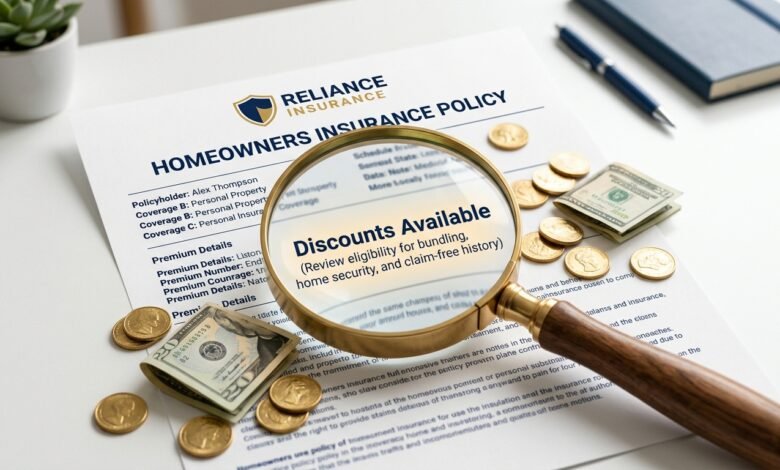
Most people assume their insurance company automatically applies every discount they qualify for. That assumption costs American policyholders real money every year.
Unless you specifically ask, insurers do not proactively surface savings. The discounts are often sitting in the system, attached to your profile, waiting to be claimed. You may be paying $200 to $300 more annually than a neighbor with virtually identical coverage — not because of bad luck, but simply because you have never asked the right questions.
This article covers the most commonly missed discounts across auto, home, and renters insurance — and explains exactly how to claim them. For a deeper look at how payment timing affects your total cost, see our guide on paying insurance annually vs monthly.
Why Insurers Do Not Tell You About Every Discount
Your renewal notice shows a number. It rarely explains what you might have saved or what programs you were eligible for but missed. Insurers are not required to walk you through every available discount. That responsibility sits with you.
The discounts covered below are real, widely available across the United States, and routinely go unclaimed — not because they are hard to access, but because most policyholders never ask.
The National Association of Insurance Commissioners (NAIC) recommends reviewing your coverage and comparing rates at least once per year — and that review is the ideal moment to ask about unclaimed discounts.Occupation and Professional Association Discounts
Your job title influences your insurance premiums more than most people realize. Certain occupations have statistically lower claim rates, and insurers price for that. Workers in fields like education, nursing, military service, firefighting, engineering, and science may qualify for meaningful discounts on auto and homeowners insurance.
Some insurers also offer group rates for members of specific alumni associations or trade organizations. The American Bar Association, AARP, AAA, and various federal employee groups have negotiated rates with certain carriers.
If you have changed jobs since your last policy review and never updated your insurer, you may be missing a rate adjustment. A ten-minute call to ask whether your current occupation qualifies costs nothing.

The Loyalty Discount Reality Check
Understanding why neighbors with similar homes and cars pay different insurance rates is one of the most revealing ways to see how pricing actually works. Our article on why your neighbor pays less for insurance breaks down the specific factors that cause identical-seeming households to be priced very differently.
Long-term customers sometimes receive loyalty discounts for staying with the same insurer for several years. That benefit is real. But loyalty is not automatically rewarded everywhere.
Some insurers apply a practice known as price optimization — using data modeling to set renewal rates based on how likely a customer is to shop around. If you have stayed loyal without comparing competitor rates, your renewal price may have quietly increased even while a loyalty discount appears on your statement.
The practical takeaway: ask your insurer what loyalty discount is applied to your account, and compare that against what a competing carrier would charge you today.
Low Mileage Discounts for Auto Insurance
The less time you spend on the road, the lower your statistical risk of an accident. Most major auto insurers offer a low mileage discount to drivers who stay below a threshold — commonly 7,500 to 12,000 miles per year, depending on the carrier.
If you retired, stopped commuting, or switched to public transportation since you last updated your policy, your reported mileage may no longer reflect how much you actually drive. Updating your mileage with your insurer — verified by an odometer reading — can reduce your premium without changing your coverage at all.
Usage-based insurance programs take this further. These programs use a smartphone app or a small plug-in device to track actual miles driven, and your premium reflects real behavior rather than estimates.
Home Security and Safety System Discounts
Installing a professionally monitored home security system can reduce your homeowners insurance premium. Most people who qualify for this discount never receive it — not because their insurer does not offer it, but because they never submitted documentation.
Our detailed article on how a security system affects your insurance rates explains exactly what documentation your carrier needs and which system types qualify for the largest credits.
Carriers want proof. A certificate from your alarm company confirming that your system is professionally monitored through a licensed central station is typically what triggers the discount. The discount range typically falls between 5% and 20% on your homeowners premium. On a $1,500 annual policy, that is $75 to $300 back per year.
Paperless Billing and Auto-Pay Discounts
Most US carriers offer a 1% to 5% discount for enrolling in paperless billing and a small additional reduction for setting up automatic payments from a bank account.
Combined across an auto policy, a homeowners policy, and a renters policy, this can trim $40 to $80 per year from your total insurance spend. It takes about five minutes to set up in your online account and typically applies at the next billing cycle.
Bundling Policies You Did Not Know You Could Combine
Most people have heard of the home and auto bundle. What fewer people know is that bundling options extend well beyond that pair. Many carriers allow you to bundle renters insurance, life insurance, boat insurance, umbrella policies, and even pet insurance under a single carrier for multi-policy discounts.
One thing worth verifying: bundled rates are not always cheaper than buying each policy separately from different carriers. It is worth running the comparison before renewing automatically. If you rent rather than own, see how renters insurance fits into a bundle and what coverage amounts make sense before you start comparing quotes.

Discounts Based on How You Pay
The frequency and method of your payment affects your total annual cost more than most policyholders realize.
| Payment Method | Typical Savings | Notes |
|---|---|---|
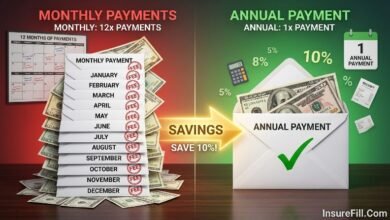
| Paying annually upfront | 5% to 15% less than monthly | Avoids installment fees entirely |
| Auto-pay from bank account | 1% to 5% | Carrier prefers guaranteed payment |
| Paperless billing | 1% to 3% | Small but compounds with auto-pay |
| Monthly without auto-pay | No savings, sometimes extra fees | Installment fees can add $50 to $100 per year |
For a full breakdown of the real dollar difference between annual and monthly payment, see our article on paying insurance annually vs monthly.
Telematics Discounts for Auto Insurance
Telematics programs have expanded significantly in the US market since 2022. These programs track how you actually drive — acceleration patterns, braking habits, speed, and time of day — rather than estimating risk from demographic data alone.
For careful drivers, participation can reduce your auto insurance premium by 10% to 40%. The programs go by different names depending on the carrier and are generally opt-in.
One important caveat: driving data can work against you. If you frequently drive late at night or tend to brake hard, the program may not help your rate. Ask your insurer whether participation can increase your base rate before you opt in. Some programs guarantee the discount can only lower your rate. Others make no such guarantee.
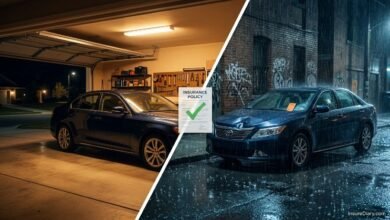
If you recently bought a home with a garage, that can also affect your auto rate. See our article on whether a garage lowers your car insurance for how storage location is factored into premiums.
Good Student and Student Away From Home Discounts
If you have a teenager on your auto policy who maintains a B average or higher, a good student discount likely applies. Most major carriers offer this, but the student needs to submit proof of grades each semester — a report card or school transcript.
Separately, if your student attends college more than 100 miles from home and did not bring a car to campus, you can often qualify for a substantial rate reduction on their portion of the policy. Many families miss this because they forget to update the insurer when the school year begins. It does not apply automatically.

Claim-Free and New Customer Discounts
Staying claim-free for three or more consecutive years typically qualifies you for a claim-free discount or accident forgiveness credit. Your insurer may have applied this automatically — or may not have. It is worth asking explicitly.
New customer discounts work differently. When you switch carriers, many insurers offer introductory pricing lower than their standard rate. This is one of the reasons that shopping your coverage every two to three years is worthwhile even if you are generally satisfied with your current provider.
The NAIC consumer resources page offers guidance on comparing insurance providers and understanding your rights as a policyholder in your state.How to Find Out What You Are Missing
Log into your insurer’s online portal or call their customer service line and ask one direct question:
“Can you run through every discount currently applied to my policy and every discount I might qualify for but have not claimed?”
Categories worth asking about specifically:
- Multi-policy discounts including renters, life, and umbrella
- Occupation or professional association discounts
- Low mileage or telematics enrollment options
- Home security or smart device credits
- Annual payment or paperless billing savings
- Good student or student away from home reductions
- Claim-free or loyalty credits currently on your account
Key Takeaways
Occupation discounts exist for dozens of professions and are rarely applied automatically. Low mileage discounts require you to update your insurer with actual current mileage. Telematics programs can save 10% to 40% for careful drivers, but ask whether they can also raise your rate before enrolling. Bundling saves money but is not always cheaper than shopping each policy separately. Paying annually instead of monthly often removes installment fees and earns a direct premium discount. Good student and student away from home discounts require paperwork you have to submit yourself.
Frequently Asked Questions
Log into your insurer’s website or call their customer service line. Ask them to list every discount currently applied to your account, then ask a second question: are there any discounts you could qualify for that are not currently applied?
Yes. New customers sometimes receive introductory rates, and different carriers weight discounts differently. Shopping your policy annually lets you compare what each carrier applies to your specific profile.
They do. State insurance regulators must approve the discount programs a carrier offers in their state. Some discounts available in Texas may not be offered in California or New York. Your best source for what applies in your state is your insurer directly or your state insurance commissioner’s office.
Some carriers guarantee that participation cannot raise your base premium, only lower it. Others do not make that guarantee. Always ask before enrolling.
No. Asking about discounts is not the same as changing your coverage. Your policy terms and limits stay the same unless you actively request changes.
Yes. Many carriers will bundle a renters policy with life insurance, pet insurance, or an umbrella policy even without an auto policy. See our guide on how much renters insurance you need before bundling to make sure your coverage amount is right first.
Discounts Most Renters Never Think to Ask About
Renters insurance is already one of the most affordable insurance products in the US — but that does not mean you should pay more than necessary. Several discounts apply specifically to renters policies and are rarely surfaced automatically.
New customer discounts. When you switch renters insurance providers, many insurers offer introductory pricing that is meaningfully lower than their standard renewal rate. Shopping at each renewal cycle — even if you plan to stay with your current provider — gives you leverage to negotiate.
Claims-free discount. If you have never filed a renters insurance claim, your insurer likely has a claims-free discount available. It may be applied automatically. It may not be. Ask explicitly whether it appears on your current policy.
Age-based discounts for senior renters. Some carriers offer reduced rates for policyholders over 55 or 65. These are not always listed prominently because insurers know younger customers will not ask about them.
Student discounts. If you are a full-time student renting near a university, some carriers offer student-specific pricing. This overlaps with the good student discount but applies at the renters policy level rather than the auto level.
Association membership discounts. Professional associations, alumni networks, credit unions, and employer groups sometimes have negotiated group rates with specific insurers. AARP, certain teacher associations, and federal employee groups are common examples. Check whether any organizations you belong to have insurance partnerships.
Security device discounts for renters. Our detailed article on how a security system affects insurance rates explains exactly what monitoring setup qualifies and what documentation you need to claim this discount on your renters policy.
How to Stack Discounts for Maximum Savings
Individual discounts are valuable. Stacking multiple discounts against the same policy produces genuinely significant savings over time.
Here is a realistic example of how stacking can look on a combined home and auto portfolio:
| Discount Applied | Estimated Savings |
|---|---|
| Multi-policy bundle (home + auto) | 8% to 15% |
| Claims-free for 3+ years | 5% to 10% |
| Professionally monitored security system | 5% to 15% |
| Paperless billing + auto-pay | 3% to 5% |
| Annual payment instead of monthly | 5% to 10% |
| Good student discount (on auto) | 5% to 15% |
| Occupation or association discount | 3% to 8% |
Not every insurer offers every discount, and the percentages vary by carrier and state. But the principle holds: each additional discount reduces a base premium that is already reduced from previous discounts. The compounding effect is real.
A policyholder who stacks five of these discounts can realistically reduce their total combined insurance spend by 25% to 40% compared to someone who accepts the first quote with no negotiation. The NAIC consumer resources page provides state-specific guidance on what discount types carriers in your state are permitted to offer.One Question That Can Save You Hundreds of Dollars Right Now
This section is worth reading carefully because it describes the single highest-value action most policyholders never take.
Call your insurance company. Ask this exact question:
“Please review my entire policy and tell me every discount currently applied and every discount I might qualify for that is not currently applied.”
Then stop talking. Let them go through it.
Most customer service representatives have access to a full discount eligibility checklist in their system. They will run through it if you ask. Many will not run through it unless you ask.
The reason this works is simple. Your insurer has no financial incentive to proactively reduce your premium. They have a regulatory obligation to offer you rates they are permitted to charge. Those are two different things. Your rate may be legal and above the minimum you could qualify for simultaneously.
Policyholders who make this call regularly report finding $50 to $250 in annual savings on a policy they have held for years without changing anything about their coverage. The call takes twenty minutes. The savings repeat every year.
For the full list of every discount category worth exploring on this call, our article on how installing a security system affects insurance rates and the broader discount article above together cover every category worth raising.

Disclaimer: The information in this article is for educational purposes only and does not constitute financial, legal, or professional insurance advice. Coverage terms, regulations, and pricing vary by insurer, state, and individual policy. Always consult a licensed insurance professional before making any coverage decisions.
Last Updated: June 2026