


You pull up your insurance renewal notice and the number makes you pause. You know your neighbor has the same coverage. Same street. Possibly even the same insurance company. But somehow their bill is hundreds of dollars lighter than yours every single year. It feels like something is off.
The truth is nothing is off. Why insurance premiums differ from one household to the next comes down to a long list of factors that most people never think to question. Some of those factors are outside your control. But a surprising number of them are not.
According to the Insurance Information Institute every insurer builds a pricing model around the likelihood that a given policyholder will file a claim. The lower your perceived risk the lower your premium. The problem is that “perceived risk” is calculated from dozens of individual data points that are unique to you and have nothing to do with your zip code alone.
This article walks through the real reasons behind that gap and shows you where you have room to close it.
⚠️ Disclaimer: This article is for educational purposes only and does not constitute financial, legal, or professional insurance advice. Insurance premiums, policies, and eligibility criteria vary by state and by provider. Always speak with a licensed insurance professional before making coverage decisions.
What Actually Makes Insurance Premiums Different for the Same Coverage?
Insurance premiums differ from person to person because every insurer assigns you an individual risk score built from your personal history, your financial profile, your property details, and your past behavior as a policyholder. Two people with identical homes on the same block can have completely different risk scores. That score is what determines your premium.
A direct answer for clarity: insurance premiums differ because insurers calculate the probability that each individual policyholder will file a claim. Factors like credit history, past claims, deductible choices, bundling, vehicle type, and annual mileage all feed into that calculation separately for each person. No two risk profiles are identical even between neighbors.
Your Credit Score Is Doing More Work Than You Realize
In most US states insurers are legally allowed to use a version of your credit history called an insurance-based credit score to help set your premiums. This is a separate calculation from your regular FICO score but it draws from similar data including payment history and outstanding balances.
Policyholders with strong credit histories consistently pay less than those with lower scores. According to Bankrate’s analysis of credit score impact on car insurance rates drivers with poor credit can pay dramatically more for auto coverage compared to drivers with excellent credit. The gap for homeowners insurance is similarly significant in most states.
California, Massachusetts and Michigan are notable exceptions. Those states restrict or ban the use of credit in insurance pricing. If you live anywhere else your credit score is very likely influencing what you pay right now.
Improving your credit score is one of the slower paths to a lower premium. It is also one of the most powerful. Paying bills on time, reducing credit card balances and disputing errors on your credit report all contribute over time.
How Loyalty Actually Cuts Both Ways
Many insurers reward customers who have stayed with them for multiple years without a lapse in coverage. Your neighbor might have been with the same company since they moved in. That tenure can translate into meaningful loyalty discounts over time.
That said loyalty is not a one-sided benefit. Some insurers quietly raise rates on long-term customers who stop comparing what competitors would charge. The industry term for this practice is price optimization. The National Association of Insurance Commissioners has flagged concerns about this practice in several states and some states have moved to restrict it.
The practical read on this is simple. Loyalty can help you if your insurer actively rewards it. But staying loyal without checking the market every two to three years means you might be paying a premium for doing nothing wrong.
The Bundling Advantage Your Neighbor Might Be Using
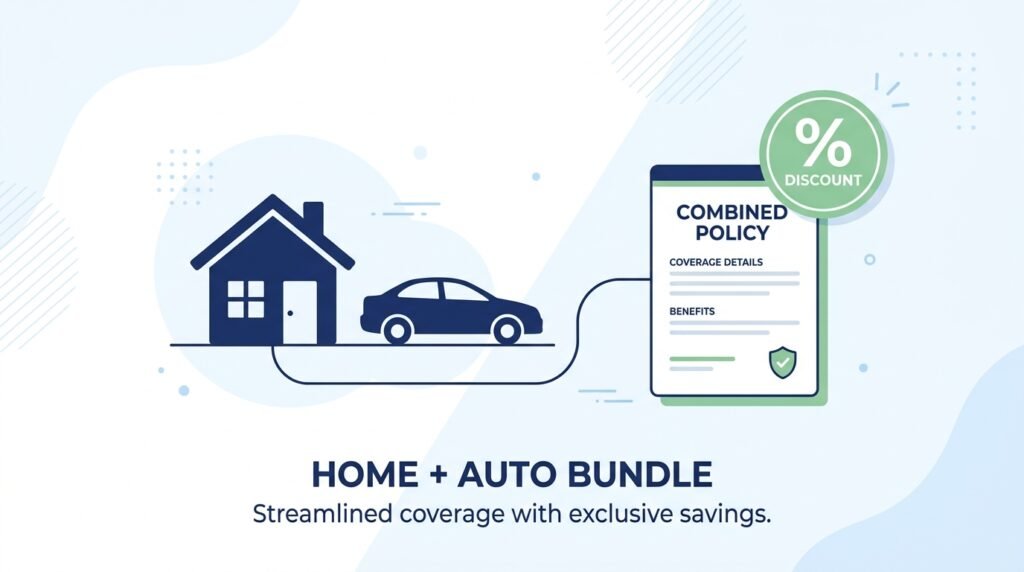
One of the most common explanations for premium differences between neighbors is bundling. When someone packages their home and auto insurance through the same company they typically receive a discount on both policies. In some cases that discount is significant enough to make a noticeable dent in annual costs.
If your neighbor has their car, home and possibly an umbrella liability policy with one insurer they could be paying noticeably less per policy than someone who buys each one separately. Understanding how insurance bundling works and what it actually saves is worth doing before you decide whether it makes sense for your situation.
The discount percentage varies by insurer and by state. Some carriers offer around 10 percent. Others offer as much as 25 percent. It depends on what you are bundling and who you are bundling with.
What You Drive and Where You Park It
For auto insurance specifically your vehicle matters a great deal. The make, model and year all influence your rate. Cars with higher theft rates or expensive replacement parts cost more to insure regardless of how carefully you drive.
Where you park also counts. If your neighbor has an enclosed garage and you park on the street their comprehensive premium could be noticeably lower. The reasoning is straightforward from an insurer’s perspective: covered vehicles face less exposure to weather damage, vandalism and opportunistic theft. There is a detailed breakdown of how parking in a garage affects your car insurance rate if you want to understand exactly how much this factor can move the needle.
Your annual mileage is another variable many drivers overlook. Someone who works from home and drives 6,000 miles a year is statistically less likely to be in an accident than someone commuting 18,000 miles annually. If your mileage dropped significantly since your last renewal and you have not reported the change you might be paying for a risk level that no longer reflects your actual driving life.
Deductible Choices Are Not Always Comparable
Here is something that often gets lost in these neighbor comparisons. Two people can have the same insurer, the same property and the same coverage limits. If one chose a $2,500 deductible and the other chose a $500 deductible their premiums will look nothing alike.
A higher deductible means the policyholder absorbs more out-of-pocket cost before the insurer steps in. In exchange the insurer charges less each month. Your neighbor might simply be willing to carry more financial risk in a claim scenario.
This is not inherently better or worse. It depends entirely on your financial situation. If you have a solid emergency fund a higher deductible can save you real money over time. If an unexpected $2,500 expense would create serious hardship the lower deductible is worth the higher premium.
Occupation and Professional Discounts
Your job can influence what you pay for insurance and this surprises a lot of people. Some insurers give discounts to certain occupations considered statistically lower risk. Teachers, engineers and nurses often appear on these lists. Other occupations may carry higher rates based on historical claim data across that group.
This is not universal across all insurers and not every state allows occupational rating. But it is worth knowing that your profession can affect your rate in ways that are not always transparent when you sign up.
Some professional associations and alumni organizations also carry group insurance arrangements. If your neighbor belongs to a union or a professional group with a negotiated rate structure they may be accessing pricing that is not available to individual buyers shopping on their own.
Claims History and the CLUE Report
Every claim you file gets recorded in a database called the Comprehensive Loss Underwriting Exchange report. Most people know it as the CLUE report. Insurers reference this report when setting or renewing your premium. A pattern of frequent claims signals higher risk and that signal raises your rate.
Your neighbor might simply have filed fewer claims over the years. Or they might have paid for smaller repairs out of pocket to avoid triggering a claim that would raise their premium at renewal. This is a calculated decision that experienced policyholders make regularly.
CLUE reports also capture claims on properties not just individuals. If you bought a home that had multiple water damage claims under the previous owner that history can affect your homeowners premium even though you personally never filed anything. According to guidance from the Consumer Financial Protection Bureau you are entitled to request a copy of your CLUE report and dispute any inaccuracies you find directly with LexisNexis which manages the system.
CLUE entries typically remain on record for up to seven years. Filing two or three small claims in a short window usually has a larger rate impact than filing one larger claim. It is worth calculating the actual claim value against the likely premium increase before you decide to file.

A Side-by-Side Look at What Moves the Needle
The factors above do not affect your premium equally. Some carry significantly more weight than others. The table below reflects general industry patterns based on how commonly these variables influence pricing decisions across the US market.
| Factor | Typical Impact on Premium | Can You Change It? |
|---|---|---|
| Credit-based insurance score | High | Yes, over time |
| Claims history (CLUE report) | High | Partially |
| Deductible level chosen | High | Yes, immediately |
| Bundling multiple policies | Moderate to high | Yes |
| Vehicle type and parking location | Moderate | Yes |
| Annual mileage reported | Moderate | Yes |
| Occupation or professional group | Low to moderate | Limited |
| Loyalty and tenure with insurer | Low to moderate | Yes |
| Home security system installed | Low to moderate | Yes |
Source: General industry patterns based on US insurance market data. Impact levels vary by insurer, policy type and state. This table is for guidance only and does not represent quotes or guarantees from any specific carrier.
“Two people living side by side can pay wildly different premiums for coverage that looks identical on paper. The difference almost always comes down to individual factors hiding in plain sight — and more of them are fixable than most policyholders realize.”
What to Actually Do With This Information
Knowing why the gap exists is only half the picture. The more useful question is what you can do about it.
Check Your CLUE Report First
Start by requesting your own CLUE report. You are entitled to one free copy per year and it shows you exactly what an insurer sees when they look up your history. If there are errors dispute them directly with LexisNexis. Errors on CLUE reports are more common than most people expect and a single incorrect entry can affect your rate for years.
Revisit Your Deductible
Check your current deductible and honestly assess whether it still matches your financial situation. If your savings have grown meaningfully since you first bought the policy a higher deductible might make more sense than it did at the time. Adjusting your deductible is the fastest lever you can pull to change your premium without switching insurers.
Ask About Discounts Directly
Some insurers have discounts that are not proactively mentioned at signup. You may need to ask specifically. Discounts for having a monitored home security system, completing a defensive driving course, going paperless or paying annually rather than monthly are all worth inquiring about. A deeper look at insurance discounts that people commonly miss is worth reviewing before your next renewal conversation.
Get Competing Quotes Before Renewal
Get competing quotes before your renewal date arrives. Not after. Most insurers have a window where switching is clean and straightforward. Waiting until you are already renewed makes the process harder. Have you actually compared your policy details line by line with what a competitor would offer you today? Most people have not. That comparison alone sometimes reveals the entire explanation for the rate difference.
Key Takeaways
This article covers several distinct factors that affect what you pay. Here is a summary worth keeping before your next renewal.
- Your credit-based insurance score is one of the biggest rate factors in most states. Working to improve it over time can help lower your premium where credit-based scoring is legally permitted.
- Your claims history follows you through the CLUE report for up to seven years. Filing small claims can cost more in future premiums than it saves today.
- Bundling policies under one insurer is one of the fastest ways to close the premium gap between you and a neighbor who is already doing it.
- Your deductible choice has an immediate effect on your premium. Adjusting it upward is the quickest change you can make without switching carriers.
- Discounts for occupation, security systems, mileage reduction and payment method are real but not always automatic. Ask your insurer directly.
- Shopping your policy every two to three years keeps you honest about whether your current insurer is still giving you a fair rate.
Why Is My Neighbor Paying Less? Factor Checker
Answer six quick questions to see which factors may be pushing your insurance premium higher than your neighbors.
This tool is for educational purposes only. Results are general guidance and do not represent actual insurance quotes or rates from any specific insurer. Consult a licensed insurance professional for advice specific to your situation.
Frequently Asked Questions
Even at the same address your driving record, credit score, vehicle type, annual mileage and claims history are all calculated separately from your neighbor’s. Any one of those factors can explain a meaningful rate difference. Sharing a zip code only means geography is one shared variable in a much longer equation.
Yes. Insurers in most states are required to explain the rating factors applied to your policy. You can ask your agent or carrier for a breakdown. Some states also require insurers to provide an adverse action notice if your credit-based insurance score significantly raised your rate at renewal.
Not always and not always immediately. But claims stay on your CLUE report for up to seven years. Insurers look at claim frequency not just claim size. Filing two or three small claims in a short period often has a larger rate impact than one bigger claim. It is worth calculating the expected claim payout against the likely premium increase before you decide to file.
The fastest options are raising your deductible, asking specifically about discounts you qualify for and reporting any changes that reduce your risk such as installing a security system or reducing your vehicle mileage. Each of these can be addressed at renewal without switching carriers.
It can depending on your insurer and your state. Some companies apply occupational risk categories or offer profession-based discounts. It is not universal across all carriers. Ask your insurer whether your occupation or any professional memberships qualify you for a rate adjustment especially if you have changed jobs since you last shopped for coverage.
No. Even if you move to the same insurer your rate is calculated from your own individual risk profile. You might receive a better rate than your current insurer offers or a worse one. The only way to know what that company would charge you specifically is to get a quote with your actual information.
Last Updated: May 2026